
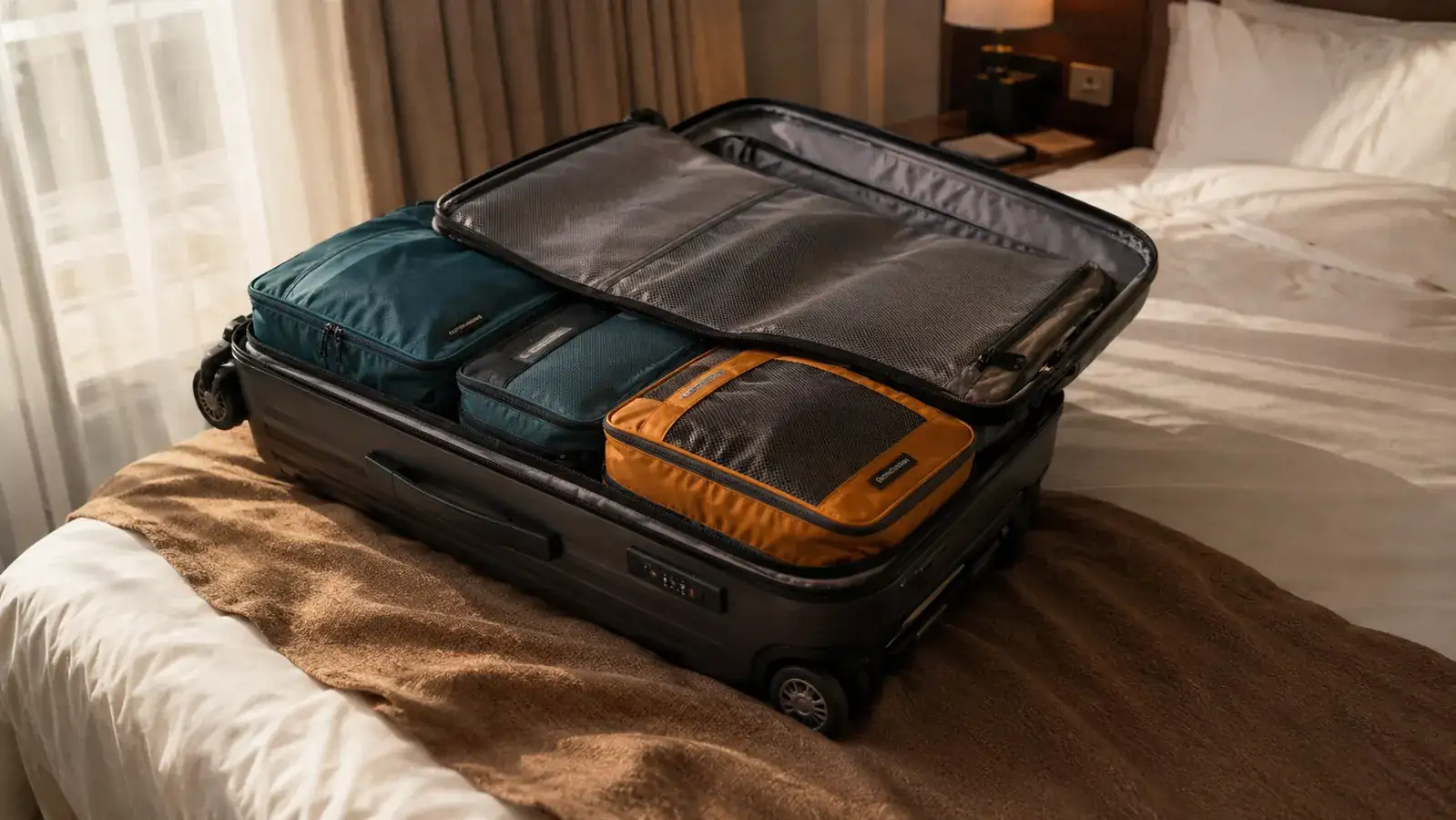
I started flying carry-on only in the summer of 2023, mostly because I got tired of watching my checked bag circle the carousel for 35 minutes after a red-eye while everyone else had already grabbed a coffee and caught a cab. The decision stuck, but it forced me to actually solve the packing problem instead of just cramming more into a bigger bag. I tried rolled clothes, mesh bags, and a brand of rigid cubes that cost twice as much as the BAGAIL set and lasted exactly two trips before a zipper pull snapped off. Six months and fourteen trips later, the BAGAIL compression packing cubes are what I am still reaching for, and I have some specific things to say about why.
The short version: they work as advertised, they hold up better than the price suggests, and they genuinely let me fit a full week of clothes into the main compartment of my 21-inch spinner. The compression zipper is the real feature, not just the cube shape. Other packing cubes organize. These actually shrink what you pack. The longer version follows, including where they fall short and who should look elsewhere.
The Quick Verdict
Real compression, durable enough for frequent travel, and a price that makes replacing one cube painless. The mesh quality is the only thing keeping this from a perfect score.
Amazon Check Today's Price →If you are packing for your next trip in the next 48 hours, this is the cube set I would grab first.
The BAGAIL 8-set includes two large, two medium, two small, and two slim cubes at a budget-friendly price. That is a full packing system, not just a single cube. Most travelers find the 6-set covers a week-long trip without needing the extras.
Amazon Check Today's Price on Amazon →How I Have Used Them
My usual kit for a week-long trip fits into a Samsonite Spinner 20 carry-on: seven days of clothes for warm weather, two pairs of shoes, a toiletry bag, a laptop, and a slim travel adapter. The BAGAIL cubes replaced a mix of department store mesh bags I had been using, which kept clothes organized but did nothing to reduce bulk. I now run the 6-set on every trip: one large cube for tops, one medium for bottoms, one small for underwear and socks, one slim for a lightweight jacket, and two extras that I alternate in or leave behind depending on trip length.
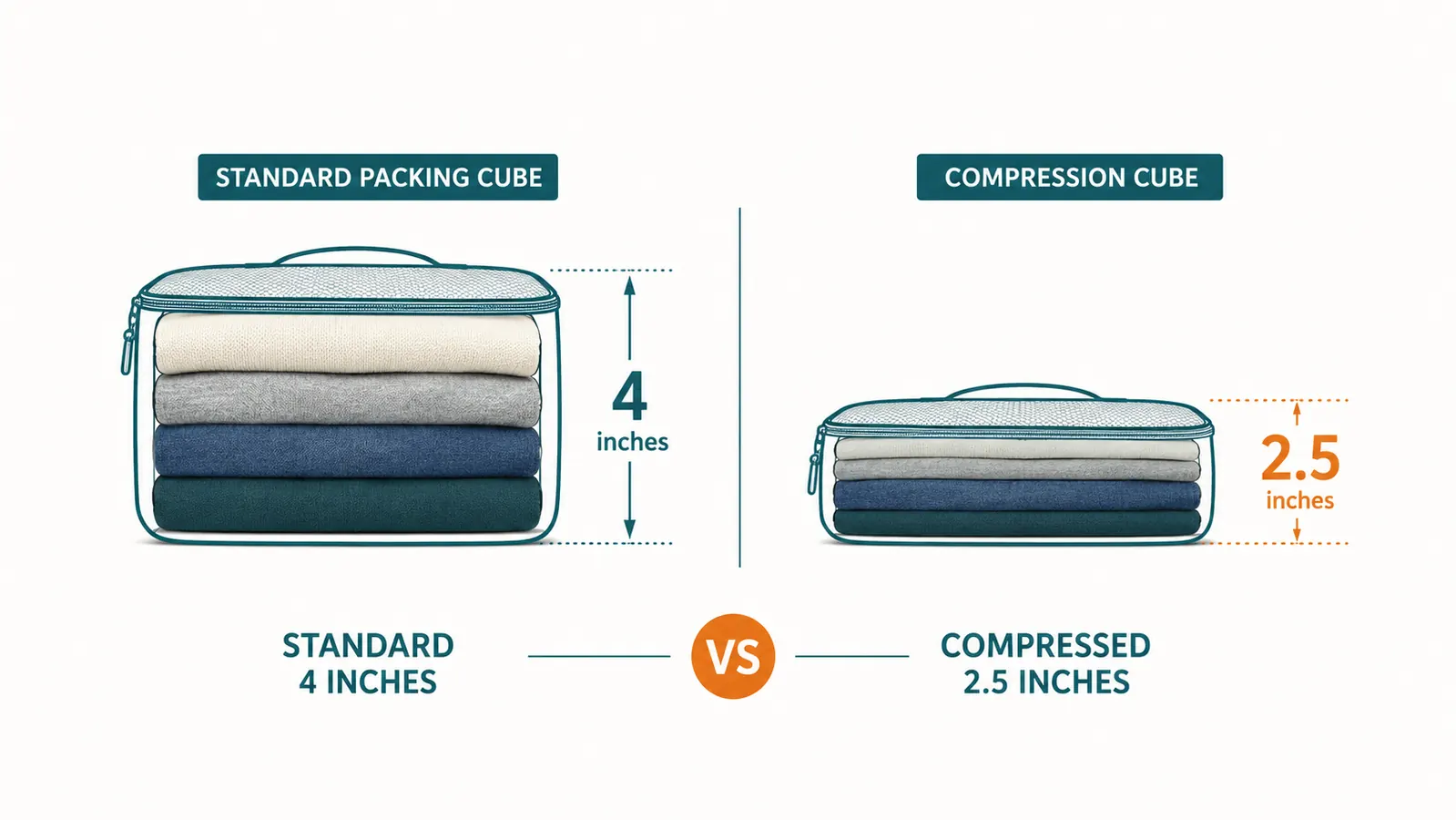
Over six months I used them on trips ranging from a three-day weekend in Montreal in January, which meant heavy layers, to a ten-day trip through Lisbon and Porto in March where I needed a mix of light and mid-weight clothes. The Montreal trip was the real stress test: a wool sweater, a thermal underlayer, a heavy-knit cardigan, and two pairs of jeans. With the compression zipper closed, the large cube shrank from about four inches thick to roughly two and a half. That gap matters when you are trying to get the lid of a carry-on to close without sitting on it.
I also run these as gym bag liners when I am not traveling. The waterproof nylon exterior holds up fine as a daily organizer. Two washing machine cycles so far, cold water, mesh laundry bag, no visible damage to the fabric or zipper teeth. That genuinely surprised me at this price.
The Compression: What Actually Happens
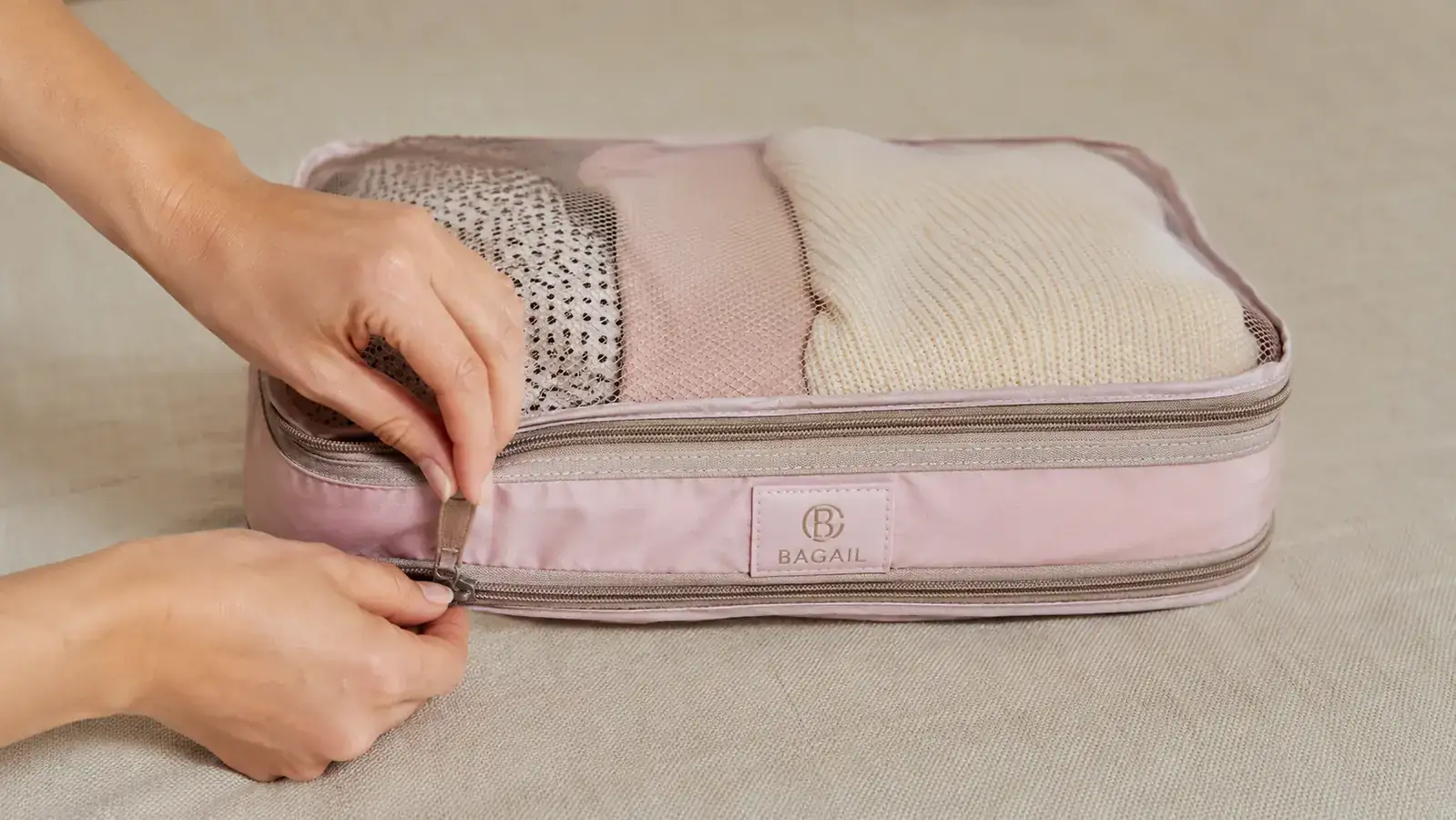
The BAGAIL compression system uses a two-zipper design. The first is a standard perimeter zip that closes the cube and holds everything in. The second is a compression zip that runs around the outside edge a second time, pulling the mesh panel down against the clothes and forcing out trapped air. These are two distinct zippers, not a fancy single-zipper trick. You zip one, then zip the other, and the cube visibly flattens.
In practice, I see roughly 30 to 40 percent volume reduction on light to medium fabrics like T-shirts, button-downs, and lightweight chinos. Heavier knits and raw denim compress less because dense fabric traps little air to begin with. If your trip wardrobe is mostly jeans and thick sweaters, do not expect compression to save you. If you are packing the typical mix of a leisure or work trip, the savings are real and visible. The large cube, fully loaded with seven tops and compressed, takes up noticeably less vertical space than it would without compression, which is what creates room for a toiletry bag alongside it.
One thing worth being clear about: compression cubes reduce the volume of air trapped between fabric layers. They do not make clothes physically smaller or lighter. If your airline enforces a personal item weight cap rather than just a size limit, compression will not help you there. It is a volume tool, not a weight tool. That distinction matters and most packing cube marketing glosses over it.
Build Quality After 14 Trips
At this price, I expected to be replacing these within a year. After fourteen trips, none of the zippers have snagged or failed. The compression zipper, which takes more mechanical stress than the main zip because it is being pulled tight against a filled cube, still runs smooth on all four cubes I use regularly. The zipper pulls are a coated nylon loop rather than a metal pull. I was skeptical of that choice, but they have not cracked or frayed through repeated daily use.
The mesh panel is my one genuine complaint. It is a looser weave than I would prefer, and on the medium cube I can see a small stretch mark forming along one corner where I have repeatedly overfilled it before compressing. It has not torn, but it is working on it. If you are methodical about not overstuffing before you close the first zipper, the mesh holds up well. If you tend to jam and force, I would budget for replacing the mediums within 18 months. The large cubes, which I fill more conservatively, show no signs of stress.
The exterior fabric is a ripstop nylon that has proven genuinely water-resistant in my experience. Not waterproof, but I once pulled these out of a rain-soaked outer pocket of my day bag and the clothes inside were dry. The interior lining is smooth and does not catch on delicate fabrics, which matters when you are loading silk blouses or merino wool sweaters and pulling them out again in a hotel bathroom at 6am.
The compression zipper, which takes more mechanical stress than the main zip, still runs smooth on all four cubes after six months and fourteen trips. I expected worse at this price point.
Size Selection: What Actually Fits in Each Cube
The 8-set dimensions: large cubes are 17.5 x 12.5 x 4 inches, mediums are 13.5 x 9.5 x 4 inches, smalls are 11 x 6.5 x 4 inches, and slims are 17.5 x 12.5 x 1.5 inches. The large is big enough to hold seven to eight folded T-shirts or four to five button-downs without compressing. After compression, it fits next to a medium cube in a 21-inch carry-on main compartment with room to spare for a slim toiletry bag.
The slims are the cubes I use least. They are designed for flat items like documents, tablets, or travel folder inserts. I use one for a packable down jacket, folded flat. The second slim I leave home on most trips. If you only need the practical cubes, the 6-set saves you a few dollars and is probably enough. The two extra cubes from the 8-set sit in a drawer unless I am packing for a longer trip where I want to separate formal clothes from casual in their own dedicated cube.

How They Compare to Other Packing Cubes
Before the BAGAIL cubes, I used a set of rigid-frame cubes from a brand I will not name because I do not recommend them. They were heavier, did not compress at all, and the hard frame dug into the interior wall of my carry-on and left a scuff mark. Before that, mesh bags from a discount travel store, which are fine for organization but add nothing to volume management. I have also tried Eagle Creek compression cubes, which are excellent and have a better mesh panel than the BAGAIL set, but they cost significantly more per cube. For a traveler doing 8 to 15 trips a year, the BAGAIL cubes deliver around 80 percent of that performance at a fraction of the cost.
The question I get most often is whether compression cubes are worth it over regular packing cubes at all. My answer is yes, with a caveat: you need to pack mostly light-to-mid fabrics for the compression benefit to be meaningful. I went deep on this comparison in my BAGAIL compression cubes vs regular packing cubes article with a direct side-by-side measurement, which is worth reading if you are still deciding between the two styles.
What We Liked
- Compression zipper genuinely reduces volume by 30 to 40 percent on most light and mid-weight fabrics
- Zippers have held up through 14 trips without snagging, splitting, or fraying
- Water-resistant exterior fabric kept contents dry when the bag got caught in rain
- Price per cube is low enough that replacing one after heavy wear is not a difficult decision
- 8-set covers a complete packing system for most travelers at a single low price
- Interior lining does not snag on delicate fabrics like silk or fine merino
Where It Falls Short
- Mesh panel has a looser weave than premium competitors and stretches visibly if overstuffed before compressing
- Compression benefit is minimal on heavy denim and thick wool that trap little air
- Zipper pulls are coated nylon loops rather than metal, which looks less premium close up
- Slim cubes have limited practical use for most travelers and inflate the set count without adding real utility
Who This Is For
These cubes are built for the traveler who wants carry-on only to actually work without a master class in packing technique. If you are flying carry-on only for the first time and you are not sure how a week of clothes fits in one bag, the BAGAIL system gives you immediate structure: each cube gets a category, you compress, and suddenly the math works. If you are already a seasoned carry-on traveler using flat mesh bags, the jump to compression cubes is noticeable from the first trip. You pack the same clothes, close the lid more easily, and have a more organized bag when you arrive. I walked through my full packing layout in more detail in my 10 reasons compression packing cubes save space guide, which covers how I assign each cube by garment type and how to sequence the fill order so the compression actually works.
Who Should Skip These
If you check bags and have no intention of switching to carry-on only, compression cubes add cost and steps without meaningful benefit. Your checked bag has room to spare, and the compression savings will not change that calculus. Save the money for something that matters in your packing setup. If you are an extreme-frequency traveler taking 50-plus flights a year, the mesh panel on the BAGAIL cubes may not last long enough to justify the purchase over a higher-end option like Eagle Creek. And if your typical packing list runs heavy on denim, thick boots, and cold-weather base layers, compression cubes will disappoint you specifically because dense fabrics have very little trapped air to remove. These are optimized for the mixed light-to-medium wardrobe, not the ski trip or the deep winter expedition.
Six months later, I would buy these again without hesitation at this price.
The BAGAIL compression packing cubes ship with Prime and come in the 4-set, 6-set, or 8-set depending on how much coverage you want. Most readers find the 6-set covers a full carry-on system for a week-long trip. The 8-set makes sense if you want to use the extras for a second bag or daily gym organization.
Amazon Check Today's Price on Amazon →