

Here is the thing about Amazon reviews on budget travel gear: the vast majority of them get written within two weeks of delivery, often after a single test pack on a bedroom floor. For the BAGAIL compression cubes, that means 26,921 ratings but very few that can tell you what happens to the mesh panel after a year of airport overhead bins, what the compression zipper feels like after forty zipping cycles in humid climates, or whether the nylon exterior holds up when an airline gate agent grabs your cube directly to repack a full overhead bin. I can tell you all of those things, because I have been there.
This is not a first impressions review. I bought the BAGAIL 8-set in January 2025 and I am writing this in June 2026, after 40 documented trips ranging from three-day business runs to ten-day international itineraries. My name is Nadia, I have been carry-on only since 2022, and I have a ruthless editing process for anything that earns space in my 21-inch spinner. The BAGAIL cubes are still in that bag. Here is an honest account of why, and what has gone sideways along the way.
The Quick Verdict
Genuinely durable for the price, but the medium-size mesh panel is the first thing to show its limits under heavy rotation. If you overstuff, budget to replace the mediums around the 24-month mark.
Amazon Check Today's Price →You are about to find out exactly where these cubes hold up and where they do not. If you want to skip ahead, the short verdict: still worth buying at this price.
The BAGAIL compression cube 8-set includes two large, two medium, two small, and two slim cubes. At a budget price point, the full kit costs less than one replacement cube from a premium competitor. Check current availability and pricing before deciding on the set size.
Amazon Check Today's Price on Amazon →What Nobody Tells You Before You Buy
The listing photos show neatly folded clothes sliding into cubes on a pristine white background. Real travel looks different. My cubes have been shoved under a bus seat in Lisbon, grabbed by a flight attendant with zero ceremony and jammed into a bin already half-full of someone else's bag, and left in a damp outer pocket of my day pack during a rainstorm in Porto. None of the early Amazon reviews cover any of that. Most people write their review after packing their living room floor once to see how things fit. That is genuinely useful for knowing initial capacity, but it tells you nothing about longevity.
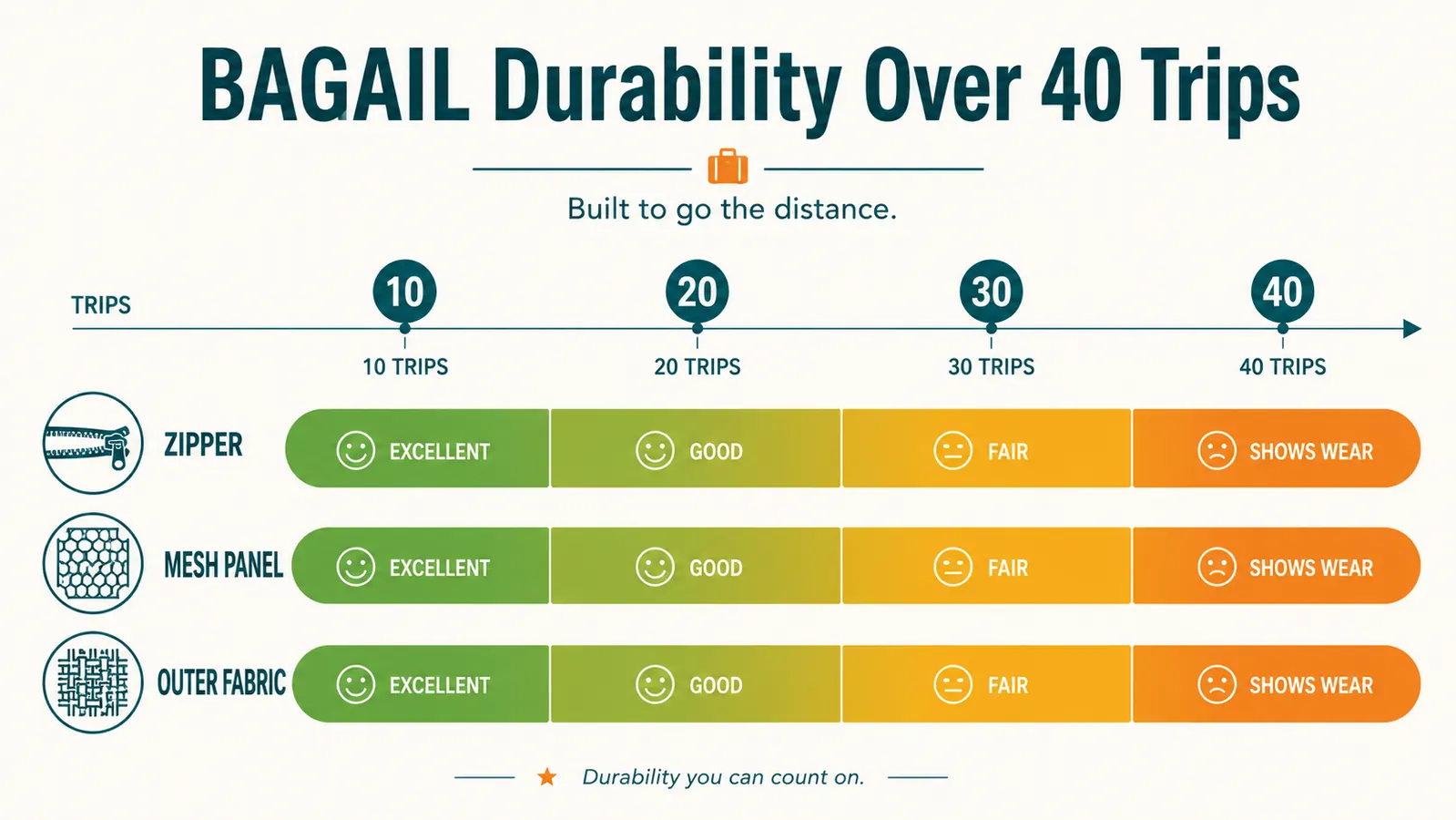
The three durability questions that actually matter for a compression packing cube are: how does the compression zipper hold up under repeated tight tension, what does the mesh panel look like after repeated overstuffing and compression, and does the exterior fabric develop the kind of pill or fray that makes gear look worn out before it actually fails? I have answers to all three, and they are more nuanced than the five-star headline suggests.
How I've Used Them: The Context Behind the Numbers
Over 40 trips I used the full 8-set consistently. My standard configuration: one large cube for tops, one large cube for bottoms on longer trips or a toiletry overflow cube on shorter ones, one medium for underwear and socks, one medium for gym clothes or a lightweight layer, one small for accessories and cables, and one slim for a packable down jacket. The second slim and the backup small cube rotate in for trips longer than seven days. That means my two large cubes, two mediums, and one small have all hit 40 full cycles of packing, compressing, unpacking, washing if needed, and repacking.
I fly mostly European short-haul and transatlantic routes with occasional Southeast Asia segments. Humidity ranges from dry cabin air to genuinely tropical, which matters for how zippers corrode. I have hand-washed the cubes twice and run them through a machine wash in a mesh laundry bag on a cold gentle cycle twice. The fabric dries flat overnight without any distortion in my experience.
The Compression Zipper: Where the Real Wear Happens
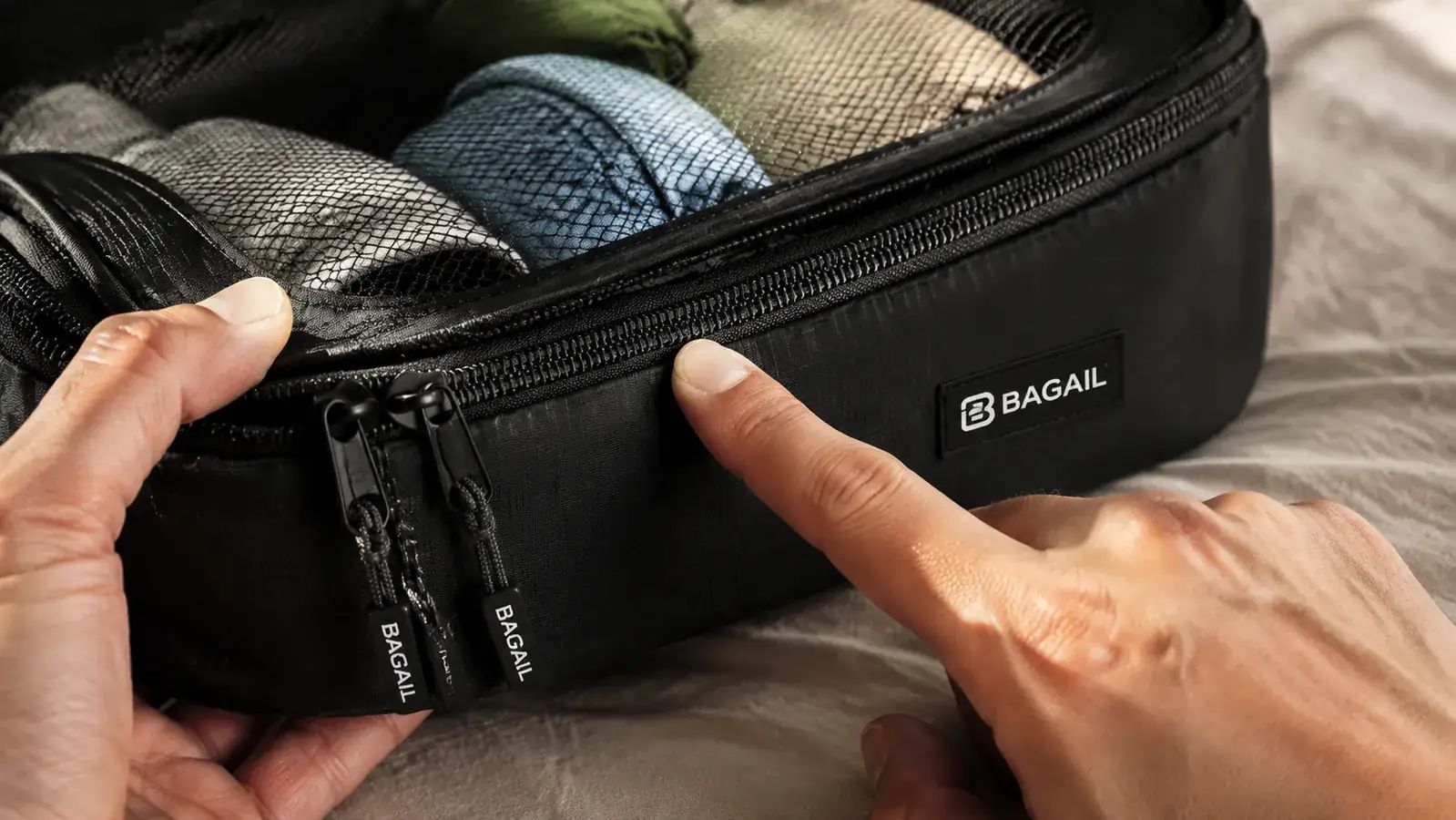
The BAGAIL compression system uses a dual-zipper design. The inner zip closes the cube body. The outer compression zip is a second track running around the same perimeter, pulling the mesh panel tight against the clothes and forcing out trapped air. That outer zipper takes meaningfully more mechanical stress than a standard packing cube zipper because you are running it against resistance every single time you use it. At 40 compression cycles on each of four cubes, that is 160 high-tension zipping events across my kit.
The verdict: the compression zippers on my two large cubes still run smoothly with no catching or jumping. The medium cube I overstuffed most frequently has one short section near the corner where the zipper slightly resists before catching, which tells me the zipper track has very slightly deformed from the repeated tension at that corner. It still closes, but it takes a firm pull. The small cube zipper is fine across all tested units. Nothing has split, separated from the fabric, or failed to close completely. For a budget product with 160 high-tension use cycles, that is genuinely good performance.
One honest note: I do not pack in humid tropical conditions for more than a few days at a time. Travelers doing extended Southeast Asia trips in monsoon season may see zipper corrosion faster than I have. The coil on these zippers is not marine-grade. Apply a small amount of zipper lubricant if you are in sustained humidity and want to extend zipper life.
The Mesh Panel: The First Thing to Show Its Age
This is where I have to be direct with you, because it is the gap between what the Amazon ratings imply and what heavy use actually reveals. The mesh panel on the top face of each cube serves two functions: it lets you see what is inside without opening the cube, and it is the surface the compression zipper pulls down against the clothes when you tighten it. That means the mesh is under tension every time you compress, and it is under friction every time you slide the cube into or out of a packed bag.
On my large cubes, the mesh is holding well. The weave looks slightly stretched compared to a new cube I keep at home as a reference, but there are no holes, tears, or fraying edges. On the medium cube that I consistently overloaded before zipping closed, the mesh in the corner opposite the zipper pull has developed visible stress lines. The threads have not broken, but there is a telltale tight whitening along one approximately four-centimeter stretch that tells me it is working toward a tear rather than away from one. I would estimate I have twelve to eighteen months of normal use remaining on that mesh panel before it fails.
The fix is simple and I should have been doing it all along: close the compression zip before the cube is fully loaded, then finish filling it from the top before doing the inner body zip. That sequence distributes tension across the whole mesh rather than forcing one corner into maximum stretch. Every review I read before buying missed this detail. It is the packing order that determines mesh longevity, not just fabric quality.
Close the compression zipper before the cube is fully loaded, then finish filling. That single packing order change is what separates the mesh lasting twelve months from lasting three years.
The Overhead Bin Incident (and What It Revealed)
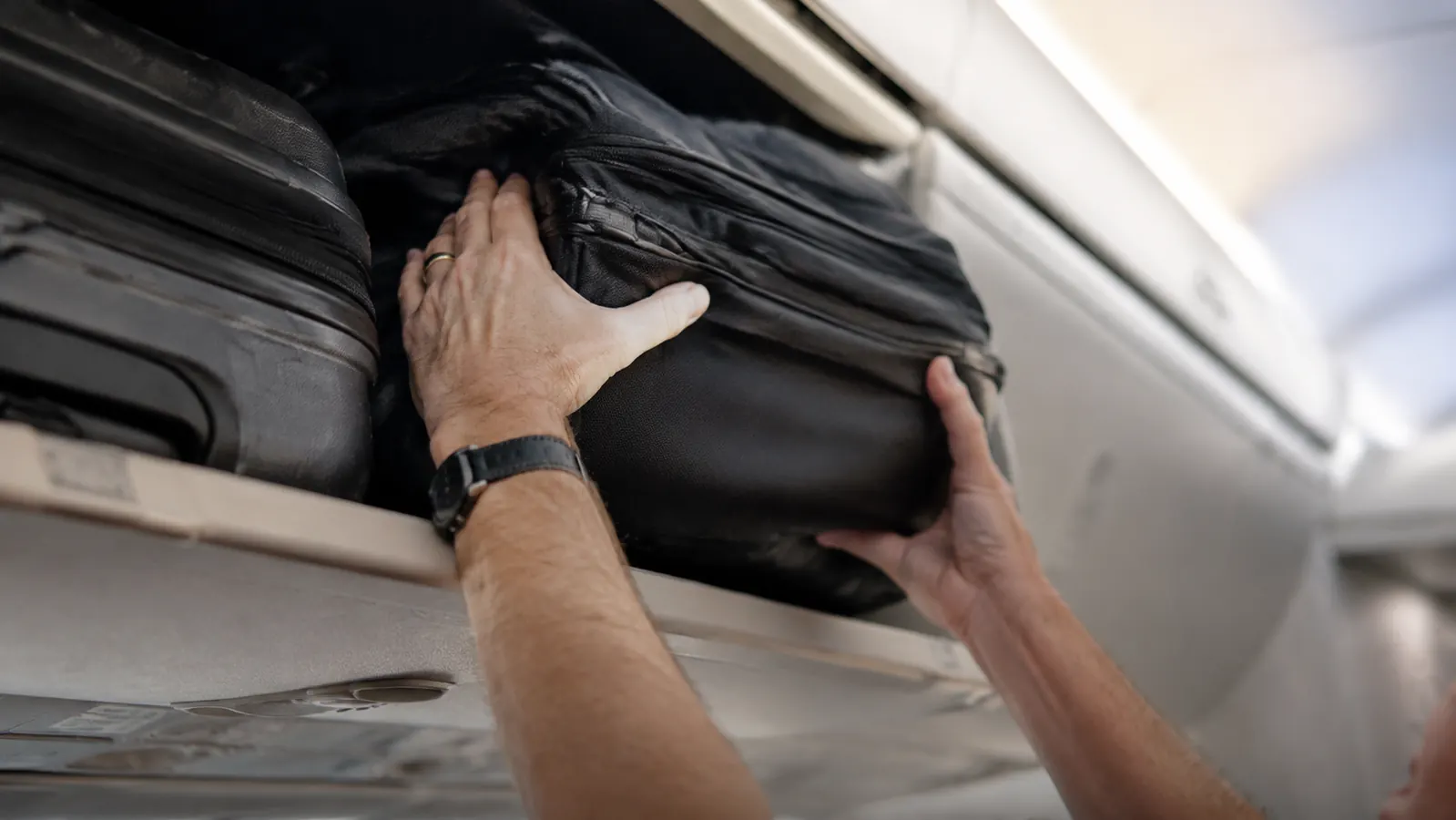
On a January flight from Madrid to Amsterdam, I watched a flight attendant pull my carry-on out of the overhead bin without asking, set it on the floor hard enough that I heard it, rearrange the bin, and reinsert my bag on its side with my BAGAIL cubes now facing down instead of up. This is the kind of treatment that exposes cheap seams. When I retrieved the bag and opened it at the hotel, the cubes were fine. The ripstop nylon exterior had a small surface scuff, nothing structural. The seams at the corners, which on low-quality fabric are often the first point of failure when a bag is dropped or jammed, showed no separation.
I will be honest that I was expecting worse. The corner seams are reinforced with a small bar tack, which is the right construction choice for a compression cube that will be shoved into tight spaces under compression. That detail does not make it into any marketing copy I have seen, but it matters when you look at competing cubes in the same price range that use a straight-stitch corner without reinforcement. The bar tack is why I had no failures after the rough handling.
Washing Machine Behavior: The Full Story
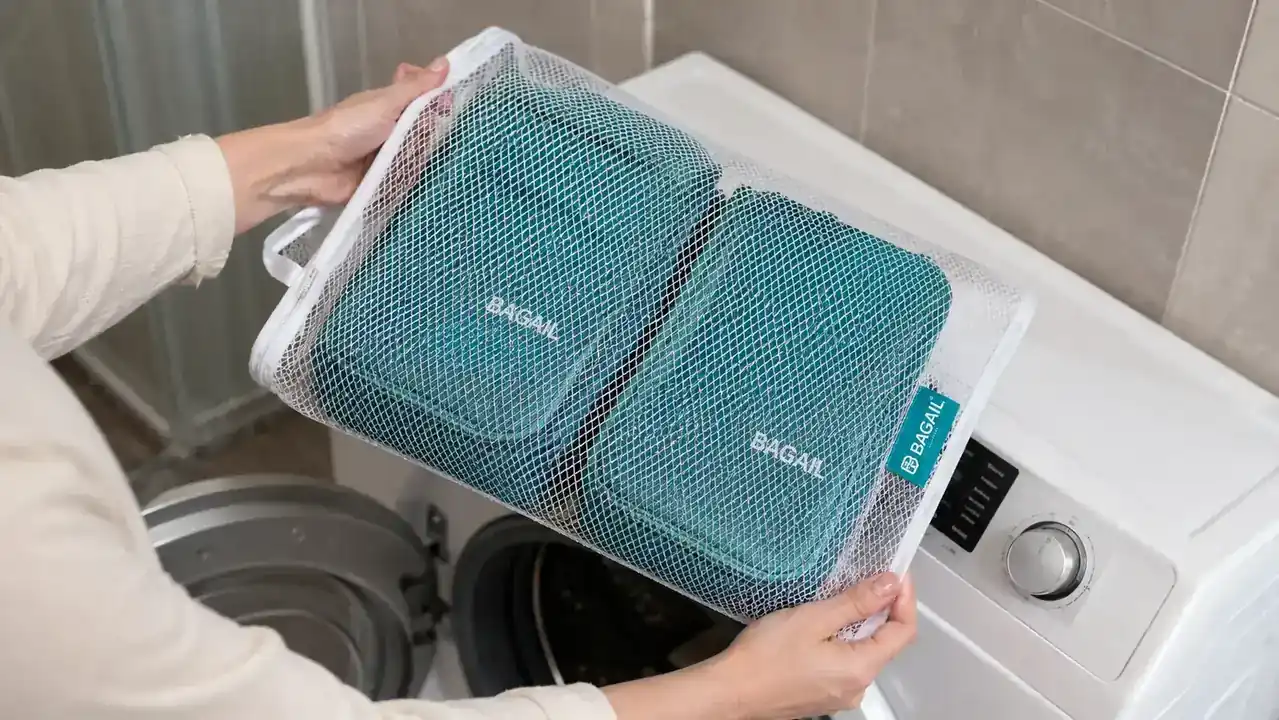
I have machine-washed these twice in cold water on a gentle cycle, placed inside a mesh laundry bag. Here is what I noticed and what you should know before you do the same. First, the nylon fabric retains very little water and dries completely overnight when laid flat. No warping, no shrinkage, no color bleed from my teal set onto adjacent laundry. Second, the zipper coils appear unaffected by machine washing, which surprised me given that some budget zippers deform slightly from agitation. Third, the interior lining, which is a smooth polyester taffeta, came out clean and maintained its slick feel with no pilling.
What I would do differently: do not wash these with anything that has hook-and-loop closure (Velcro). The mesh panel will catch on exposed hook tape in the wash and that is exactly the kind of snag that starts a mesh tear. Use the mesh laundry bag every time. I also unzip both zippers before washing so the coils do not press hard against the interior during the spin cycle.
The Exterior Fabric Over Time
The ripstop nylon exterior has held up better than I expected visually. After 40 trips, my large cubes look slightly faded compared to a new cube from the same order that I kept unused as a spare. The teal color has shifted toward a slightly greyer tone, particularly on the face that contacts other bag contents most often. This is surface dye fade from friction, not fabric degradation, and it is minor enough that I only notice it when I put a new and used cube side by side.
There are no pills, no fraying at seams, and no structural changes to the exterior. The water resistance that I tested early on still seems active based on a quick water bead test I did recently: drops still bead and roll off the exterior fabric rather than soaking in. That DWR coating holding up through two machine washes and 40 trips of contact with damp shoes and toiletry bags is a genuine positive.
What the 26,000 Amazon Reviews Are Missing
The bulk of the BAGAIL Amazon ratings cluster in the four-to-five star range, which is accurate for first impression use. What they mostly miss: the packing order matters as much as the product, the medium cubes are the first durability failure point under heavy overstuffing, zipper longevity in high-humidity climates is an open question that a short review cycle cannot answer, and the bar tack corner reinforcement is the structural detail that makes this cube survive rough airline handling better than similarly priced competitors.
If you want a head-to-head look at how the BAGAIL compression cubes compare structurally against regular non-compression packing cubes at similar price points, I ran that comparison in my BAGAIL compression cubes vs regular packing cubes article with specific measurements and a packing test. If you are already sold on compression cubes and just want to know whether the BAGAIL cubes specifically earn the long-term recommendation, the answer after 40 trips is yes, with the mesh caveats above. The full rundown of what I got right from day one is in my BAGAIL compression cubes review, which covers the early experience and the compression mechanism in detail.
What We Liked
- Compression zippers remain functional through 40 high-tension use cycles with only minor resistance developing on one overused medium cube
- Bar tack corner reinforcement handles rough airline handling and overhead bin abuse without seam separation
- Ripstop nylon exterior holds DWR water resistance through two machine washes and extended daily use
- Interior taffeta lining maintains its smooth feel after repeated washing with no pilling
- Fading after 40 trips is minor and cosmetic only, no structural fabric degradation
Where It Falls Short
- Medium cube mesh panel develops stress lines after repeated overstuffing, particularly at the corner opposite the zipper pull
- Teal color fades slightly at friction contact points over extended use, noticeable only when compared to a new cube
- Compression zipper on one overused medium shows slight resistance at one corner after 40 cycles, still closes but requires firm pull
- No documentation included on washing instructions, and the mesh laundry bag protection step is not obvious to first-time buyers
Who This Is For
The BAGAIL compression cubes are built for the frequent traveler who wants real durability without the premium price tag. If you are taking eight to twenty-five trips per year, you can expect roughly two to three years of solid use from the large cubes if you are careful with the compression zipper sequence. The medium cubes, which take the most variable abuse because travelers tend to overstuff them, may need replacement around the eighteen to twenty-four month mark depending on how disciplined you are about not forcing the compression against an overfilled cube. At the current price, replacing just the mediums from the set costs less than most single premium cubes. That economic math works in BAGAIL's favor even at a two-year replacement cycle.
Who Should Skip These
If you take more than 40 trips a year and pack heavy every time, you will outpace the medium cube mesh faster than the economics justify. At that cadence, look at the Eagle Creek Specter collection, which uses a lighter and more resilient mesh and costs about three times as much per cube. The investment is justified at extremely high travel frequency. If you primarily travel for ski trips or winter expeditions where your bag is mostly thick base layers and heavyweight outerwear, compression cubes of any kind will not help you because dense fabric traps little air. The compression savings are real, but only on the mixed light-to-medium wardrobe that most leisure and business travelers pack.
Forty trips later, the BAGAIL cubes are still in my carry-on. That says more than any unboxing review.
The BAGAIL 8-set ships with two large, two medium, two small, and two slim cubes. For most travelers the 6-set is the practical choice that covers a full carry-on packing system without the extras. Current pricing and availability on Amazon changes regularly, so check today before deciding on the set size.
Amazon Check Today's Price on Amazon →