
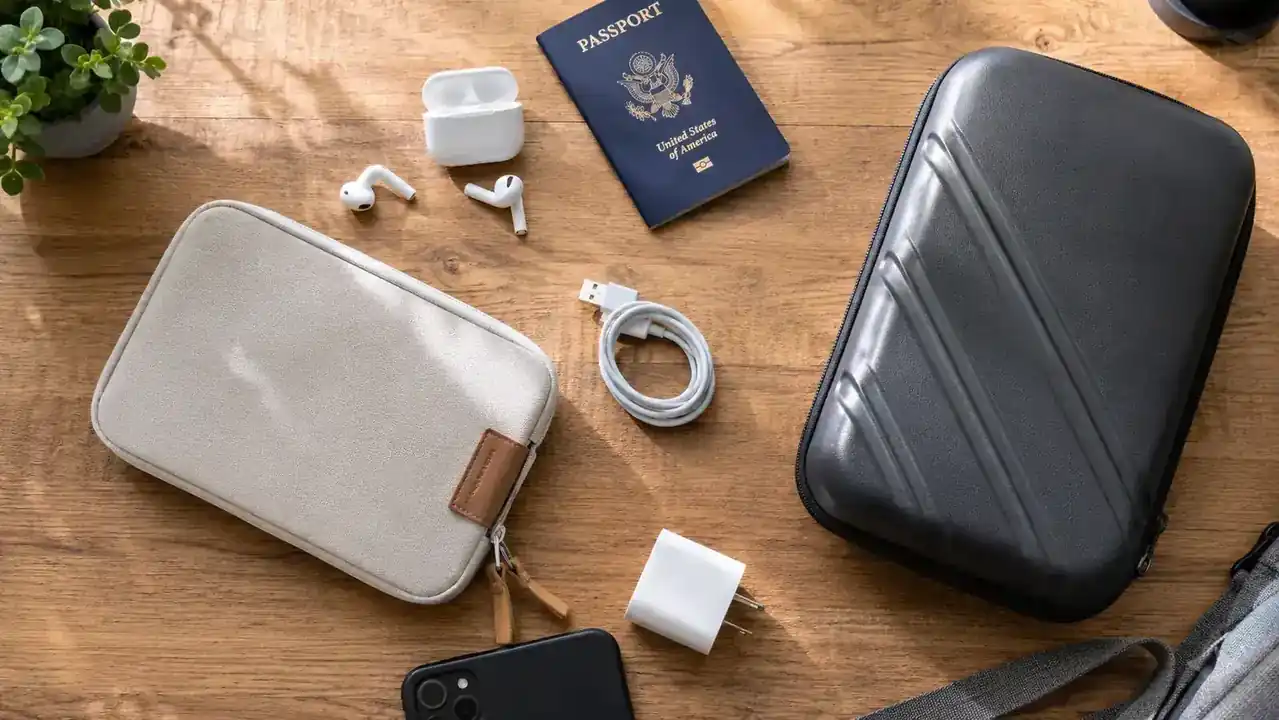
Here is the question I get from every traveler building their first real carry-on setup: do I need a hard-shell tech case, or will a soft cable pouch do the job? I spent years defaulting to "get the hard-shell" without much thought. Then I actually traveled with both back-to-back on a four-week trip through Southeast Asia and Iceland, and the answer I landed on was not the one I expected. The FYY Travel Cable Organizer Pouch outperformed a hard-shell case I paid four times as much for on almost every dimension that matters in everyday carry-on travel. It is a conclusion I came to reluctantly, because the hard-shell felt more serious, more intentional. But feelings do not fix a bag that will not close.
The short version: the FYY wins for most travelers, most of the time. Not because hard-shell cases are bad, but because the scenario where you genuinely need one is rarer than the marketing suggests. Before I got specific about my own travel style and what I was actually protecting, I was paying more and packing worse. This comparison lays out exactly where each option earns its keep and where it falls short, so you can make the right call for your kit without buying the wrong thing twice.
| FYY Cable Organizer Pouch | Hard-Shell Tech Case | |
|---|---|---|
| Price (approx.) | Check today's price on Amazon | Mid-range pricing |
| Form when packed | Soft, flexible, conforms to bag gaps | Rigid rectangle, fixed dimensions |
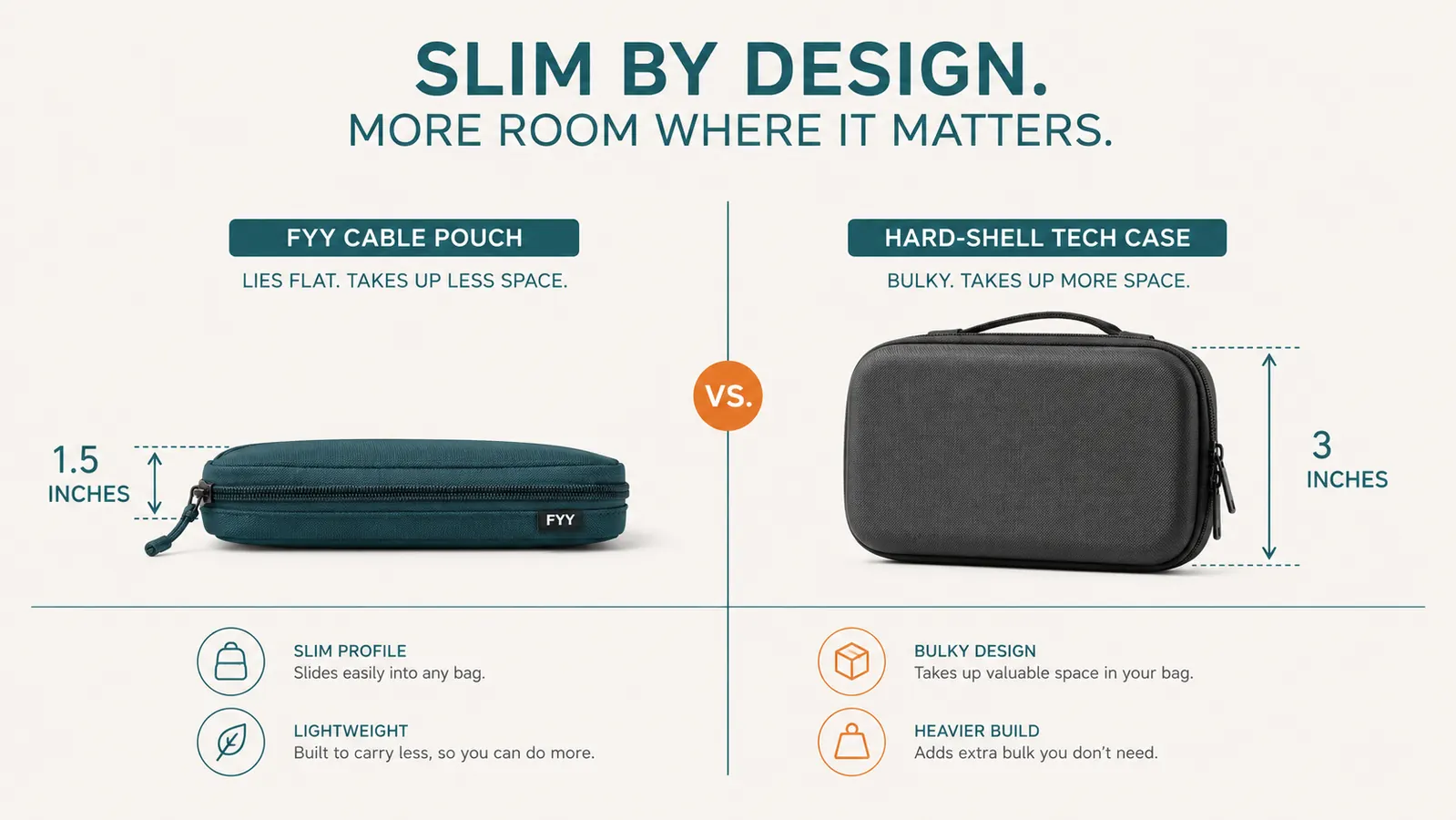
| Packed thickness | About 1.5 inches flat | 2.5-3.5 inches rigid |
| Water resistance | Waterproof exterior fabric | Waterproof zipper seal on premium models |
| Internal organization | Elastic loops, mesh pockets, two layers | Elastic loops or foam inserts, single clamshell |
| Crush protection | None (soft fabric only) | Yes, polycarbonate or ABS shell |
| Fit in slim side pockets | Yes, flexible enough to squeeze in | No, rigid shell will not flex |
| Weight | About 2.5 oz empty | 5-8 oz depending on shell thickness |
| Carry-on compatibility | Stacks or tucks anywhere | Requires a dedicated flat space |
Where the FYY Cable Pouch Wins
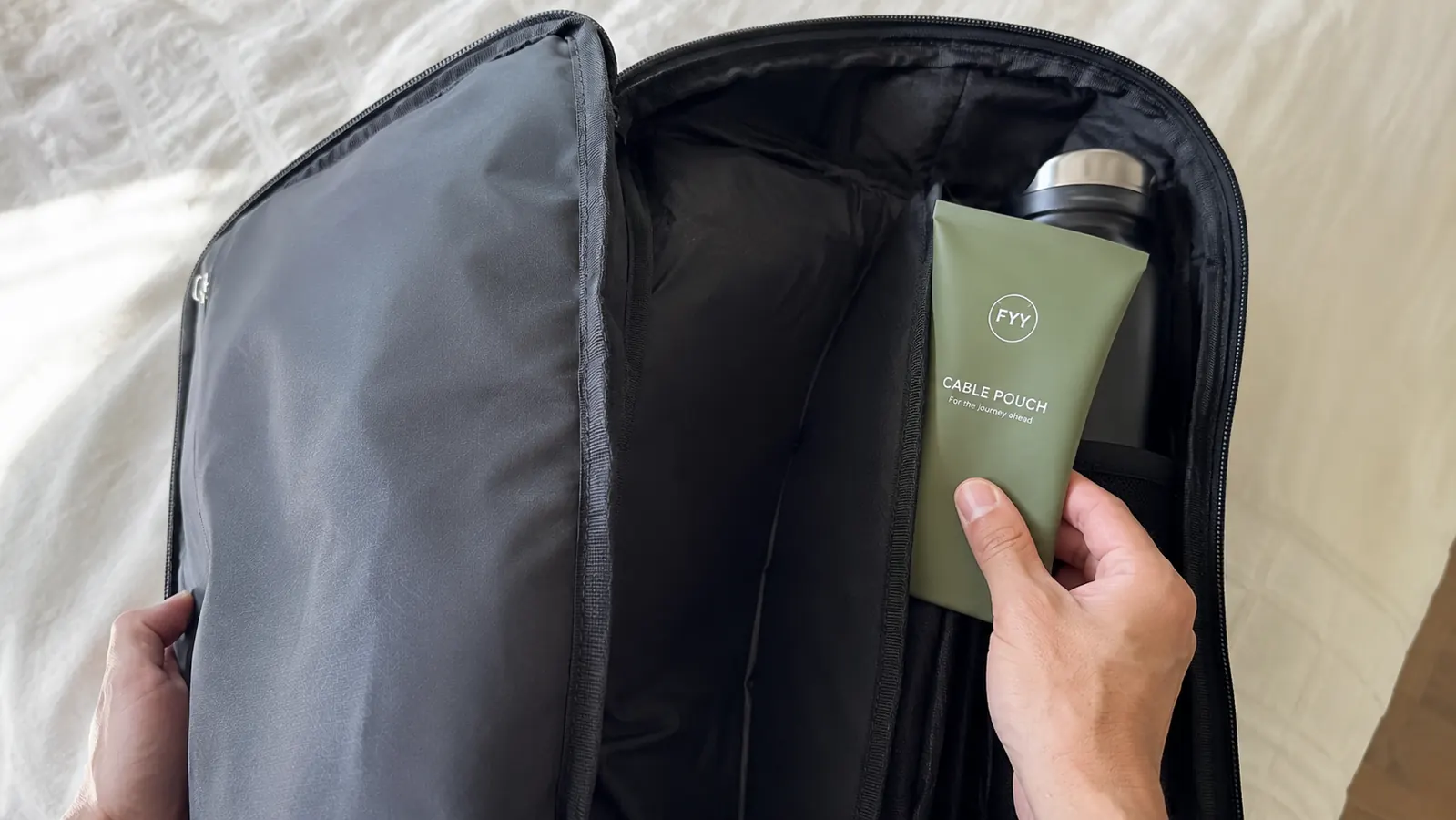
Packability is not even a contest. The FYY pouch is built from a soft, waterproof fabric that bends and compresses under pressure. When I need to slide it into the front sleeve of a personal item, or squeeze it into a half-full packing cube gap, it goes. A hard-shell case occupies whatever space it occupies, period. If the pocket is 2.8 inches wide and the rigid case is 3 inches thick, you are reorganizing your whole bag every single time, not just once.
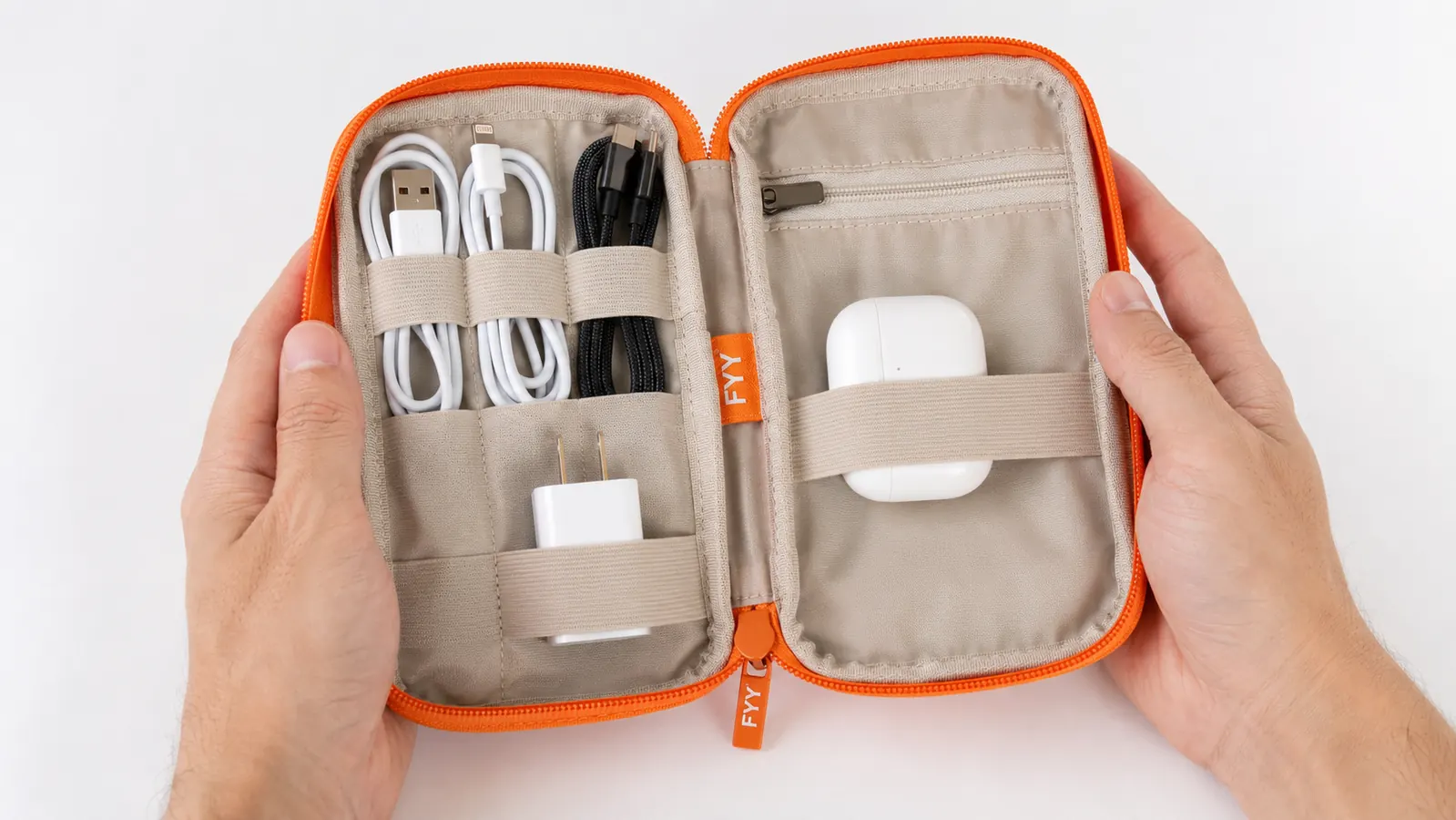
The two-layer design inside the FYY gives you more accessible surface area than most hard-shell cases at the same footprint. The inner layer holds coiled USB cables, a travel adapter, and a portable charger. The outer layer is mesh, ideal for earbuds, SD cards, and small items you want visible at a glance rather than buried under something else. I have fit a short USB-C cable, a USB-A to USB-C adapter, two pairs of wired earbuds, a GaN wall charger, and a 10,000mAh power bank inside with room to spare. That is a complete travel tech kit in something the size of a paperback novel, and the pouch still zips closed without forcing.
Weight matters on carry-on-only trips where every ounce either earns its place or gets left behind. The FYY runs about 2.5 ounces empty. Most hard-shell cases in the same size class are 5 to 8 ounces because of the polycarbonate or ABS shell. That difference compounds when you consider that the hard-shell also forces you to leave an entire dedicated pocket open to accommodate its rigid shape, costing you usable bag volume on top of the extra raw weight.
Your cables are tangled in the bottom of your bag right now. This fixes that for pocket change.
The FYY Travel Cable Organizer Pouch has 38,000+ ratings and a 4.6-star average. Waterproof exterior, two-layer organization, and it tucks flat anywhere in your carry-on. Check current availability and today's price on Amazon.
Amazon Check Today's Price on Amazon →A cable pouch that flexes to fit your bag is more useful than a perfectly organized case that forces your bag to reshape around it.
Where the Hard-Shell Tech Case Wins
If you travel with fragile electronics that cannot bend or tolerate any compression, a hard-shell case earns its bulk. Think about a photographer carrying a thin portable hard drive, a spare mirrorless battery with exposed terminals, a set of precision lens filters, or bare SD cards holding irreplaceable client photos. The rigid shell keeps those items from being crushed under a full carry-on shoved into an overhead bin. For that specific use case, a soft pouch is genuinely the wrong tool.
There is also a meaningful gap in sealed waterproofing. Some hard-shell cases use a rubber gasket or zipper perimeter seal that the FYY pouch does not have. The FYY exterior repels surface water well and handles a bag caught in light rain without issue, but it is not submersion-rated. If you are sea kayaking between islands, trekking near waterfalls, or working in genuinely wet field conditions where your pack could take a full soaking, the sealed hard-shell is the honest recommendation. The key word is "sealed" specifically, because many budget hard-shell cases use the same basic water-resistant zipper the FYY uses, meaning you are paying a premium without getting meaningfully better protection.
The Organization Breakdown Side by Side
Opening the FYY pouch on a hostel bed, everything is visible in about two seconds. Cables sit in their loops. The mesh layer shows earbuds and adapters without having to dig or unload the whole thing. Compare that to a clamshell hard-shell case, where a single-layer foam or elastic grid on the bottom half means you have to move whatever is on top before you can reach what is underneath. The FYY's double-layer layout solves a real problem frequent travelers encounter daily: separating the grab-first items, earbuds and short charging cable for the flight, from the use-later items like the wall adapter, power bank, and universal plug.
The FYY also lies flat when unzipped, which matters more than it sounds when you are searching for a cable on a narrow airplane tray table with a neighbor already encroaching on your armrest. Hard-shell cases hinge open at 90 degrees and occupy roughly double the surface area when open. On a full coach flight, the flat-open footprint of the soft pouch is a genuine quality-of-life difference that compounds over many trips.
Airport Security: One Clear Victor
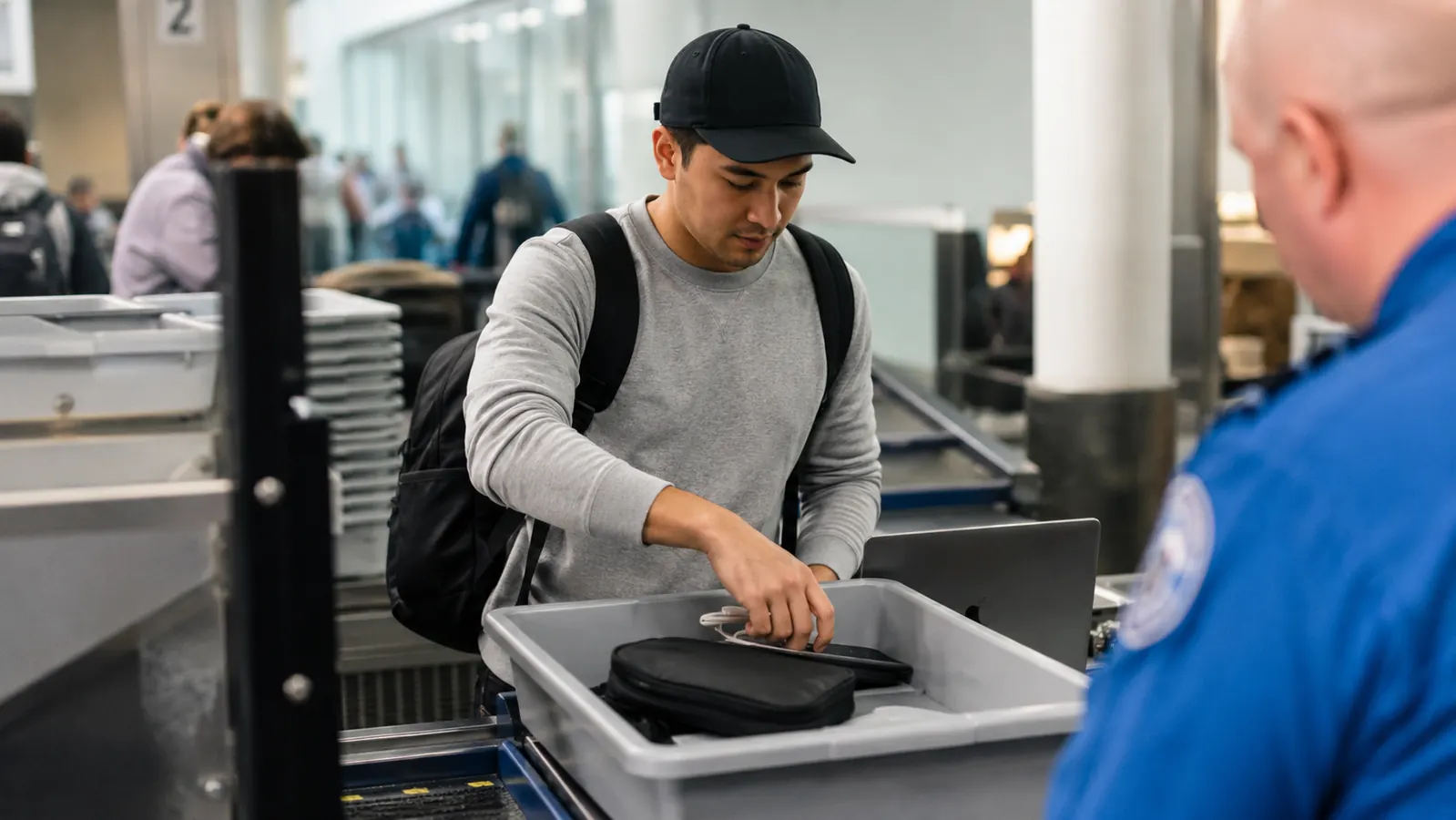
TSA generally asks you to place laptops and large electronics in a separate bin, but a cable organizer of either type typically rides along with the rest of your bag. The difference shows up in secondary screening. When an agent flags your bag for a manual check, a soft pouch that opens flat is significantly faster to inspect and repack than a rigid case with foam cutouts or multiple elastic straps. I have had agents pull out the FYY pouch, glance at the mesh panel to see the contents, and hand it back in about 15 seconds. A hard-shell case takes longer because agents want to confirm nothing is tucked behind or underneath the shell itself.
The FYY's mesh outer pocket is a genuine advantage here: an agent can visually confirm the contents through the mesh without physically removing anything from the pouch. Opaque hard-shell walls require the agent to open and partially empty the case to see inside. In busy international airports where secondary checks are more common, that difference adds real time to your screening experience and the queue behind you.
Long-Term Durability: What to Expect From Each
At 38,000 reviews and a 4.6-star average, the FYY pouch has a sample size large enough to be meaningful. The most common wear points reported are the zipper pulls and the elastic loops inside. Reviewers who use it daily for over a year note that the elastic starts losing tension after heavy use, so cables sit a bit looser than on day one but still stay put in normal travel. The outer waterproof fabric and the main zipper hold up well across this group. At its low price point, replacing it every two or three years represents a lower total cost of ownership than most hard-shell alternatives, even if you buy two FYY pouches in that same window.
Hard-shell cases are more structurally stable in the sense that the exterior shell itself does not deform. But the internal elastic or foam degrades at roughly the same rate as the FYY's, and the zipper on a rigid case is under constant spring-back stress because the shell wants to stay open rather than lying compressed and flat. Some owners report cracked shell seams after two to three years of heavy checked-bag or overhead-bin travel. At three to four times the price of the FYY, a hard-shell case that needs replacing in the same window is a harder sell on pure value.
The Hybrid Approach: When You Might Want Both
On extended trips where I am working remotely and also doing serious outdoor photography, I occasionally travel with the FYY pouch alongside a small hard-shell case specifically for camera accessories. The pouch handles the phone charger, laptop cable, earbuds, and travel adapter. The hard-shell holds spare batteries, lens filters, and a micro SD card wallet. The pouch flexes into whatever bag pocket is available. The hard-shell goes into the camera backpack where it has a fixed slot. Together they cost less than a single large premium hard-shell case and provide better organization than either option alone. But for most travelers who are not photographers or field researchers, the FYY pouch handles the entire kit and the hard-shell stays at home in a drawer.
Who Should Buy Which
Buy the FYY Cable Organizer Pouch if you are a carry-on-only traveler, a business traveler, or anyone whose tech kit is primarily cables, chargers, and earbuds. It is also the right call if you rotate between multiple bags, because the soft pouch adapts to whatever you are carrying that day without needing a dedicated slot. If you are a photographer, videographer, or field researcher carrying bare hard drives, unprotected storage media with irreplaceable data, or precision accessories that cannot flex at all, spend up for a hard-shell case with a rubber-sealed zipper. For everyone else, the FYY soft pouch is the smarter buy at every price point.
For a deeper look at what actually fits inside the FYY and how the interior holds up across months of daily use, read the full FYY Cable Organizer review. And if you want a complete system for assigning every cable and charger a permanent home so you never dig again, the cable organization guide walks through the exact setup I use on long trips.
The FYY pouch costs less than a single airport meal. It will still be in your bag in three years.
Over 38,000 travelers have rated it 4.6 stars. Waterproof fabric, two-layer organization, flex-fits anywhere in a carry-on. Check availability and current price on Amazon.
Amazon Check Today's Price on Amazon →